How to Tell If Your Solar Panels Need Cleaning (Sydney Homeowner's Guide)
Most Sydney homeowners install solar and then largely forget about it. The panels are up on the roof, out of sight, quietly doing their job. But here's the problem: they might not be doing their job as well as you think.
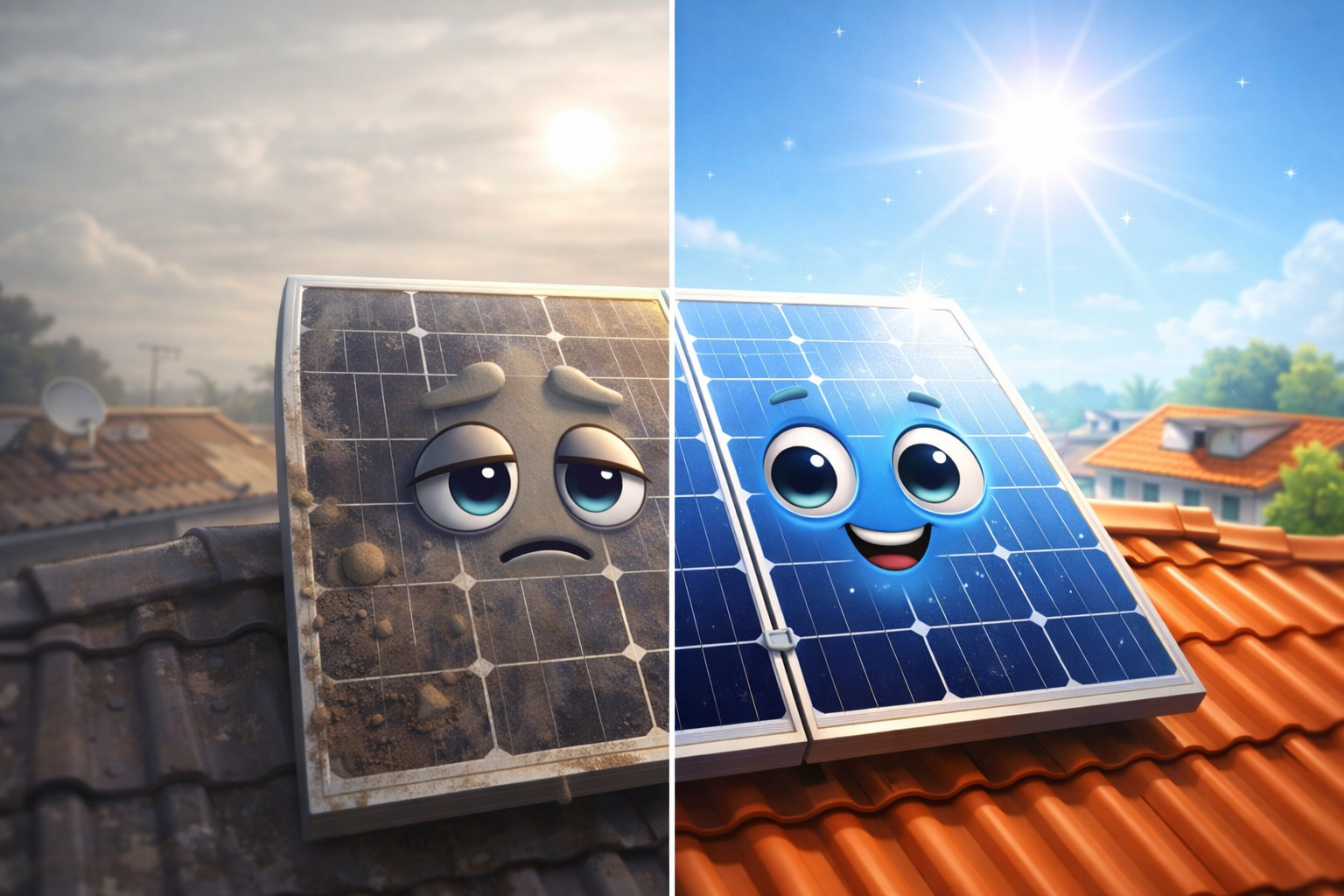
Dust, pollution, bird droppings and salt air build up on panel surfaces over time, forming a thin film that blocks sunlight from reaching the cells beneath. Scientific research confirms that soiling can reduce solar output by more than 20%, and in some cases up to 30%, under real-world conditions. That's a significant chunk of the energy you're paying your system to generate.
The frustrating part is that panels rarely look dirty from the ground. By the time you can visually tell something's wrong, you've likely already been losing output for months.
Here's how to know when it's time to act.
1. Your Inverter Output Has Dropped
The most reliable signal is your data. Most modern solar systems come with an inverter app or monitoring portal that shows your daily generation. If you've had your system for a year or more, you can compare this summer's output to last summer's, or check whether your daily generation is tracking below what your installer estimated.
A drop of 10 to 20% that can't be explained by weather or shading is often a cleaning issue. If you're generating noticeably less than you were 12 months ago on similar days, dirty panels are one of the first things to investigate.
What to do: Open your inverter app and look at your average daily generation over the past 30 days. Compare it to the same period last year. A meaningful drop is worth looking into.
2. You Can See Visible Grime, Droppings or Discolouration
If you can see the buildup from the ground, it's already bad. Bird droppings are particularly damaging because they concentrate soiling on a specific cell, which can create a "hot spot" effect that reduces output from an entire string of panels, not just the panel with the dropping on it.
Look for:
- White or grey streaks across panel surfaces
- Dark patches or concentrated marks from birds or possums
- A general dull or hazy appearance compared to when panels were new
- Visible debris like leaves, seed pods or dust caked around the frame edges
If any of these are present, cleaning is overdue.
3. It Hasn't Rained Properly in Months
Rain does help rinse light dust off panels, but it's not a substitute for a proper clean. Rainwater contains minerals that leave behind deposits as it evaporates. And for heavier soiling like bird droppings, grease particles from traffic, or organic growth, rain simply won't shift it.
Sydney summers are often dry for extended stretches, particularly from December through February. If your panels have gone two to three months without meaningful rainfall, soiling will have accumulated even if the panels still look reasonably clean from below.
Sydney coastal note: Homes near the ocean (Bondi, Manly, Cronulla and surrounds) face an additional layer of salt spray that deposits on panel glass and doesn't wash off with rain. Salt residue reduces light transmission and can cause micro-corrosion over time if left untreated.
4. You're in a High-Soiling Area of Sydney
Not all Sydney locations are equal when it comes to panel soiling rates. Where you live has a significant effect on how quickly your panels accumulate grime.
Higher soiling risk areas:
- Coastal suburbs (Northern Beaches, Eastern Suburbs, Sutherland Shire coastline): Salt air and sea spray accelerate buildup and leave mineral deposits on panel glass
- Western Sydney (Penrith, Blacktown, Campbelltown): Further from the coast but more exposed to dust, pollen and dry periods that allow fine particles to settle and cake
- Near major roads or industrial areas: Traffic pollution and airborne particles from nearby activity coat panels with a fine layer of residue
- Homes with large trees nearby: Pollen, leaf debris and organic matter from overhanging trees accelerates soiling and can promote mould or lichen growth in shaded spots
If you fall into one of these categories, panels may need attention more frequently than the standard annual clean.
5. It's Been More Than 12 Months Since Your Last Clean
Even if none of the above apply, time alone is enough to warrant a clean. For most Sydney homes, professional cleaning every 6 to 12 months is the right baseline. If it's been longer than that, especially heading into or coming out of summer, your panels are almost certainly underperforming.
Think of it this way: a 6.6kW solar system that's underperforming by 20% is effectively functioning as a 5.3kW system. Over a year, that's a meaningful reduction in the energy offsets and feed-in credits you'd otherwise be earning.
DIY Check vs. Professional Assessment
You can do a basic visual inspection yourself from ground level using binoculars or a phone camera with zoom. This is enough to spot obvious soiling, droppings or debris.
What you shouldn't do is get on the roof to check or clean panels yourself. Beyond the safety risk, improper cleaning methods (pressure washers, abrasive cloths, tap water with high mineral content) can damage panel glass, scratch anti-reflective coatings, and in some cases void your manufacturer's warranty.
A professional clean uses filtered, de-ionised water and soft-wash equipment designed specifically for solar glass. It removes grime without leaving residue, streaking or causing damage.
How Long Should Panels Stay Clean After a Service?
This depends on your environment, but a standard clean without any surface treatment will typically last 6 to 12 months before soiling returns to levels that affect performance.
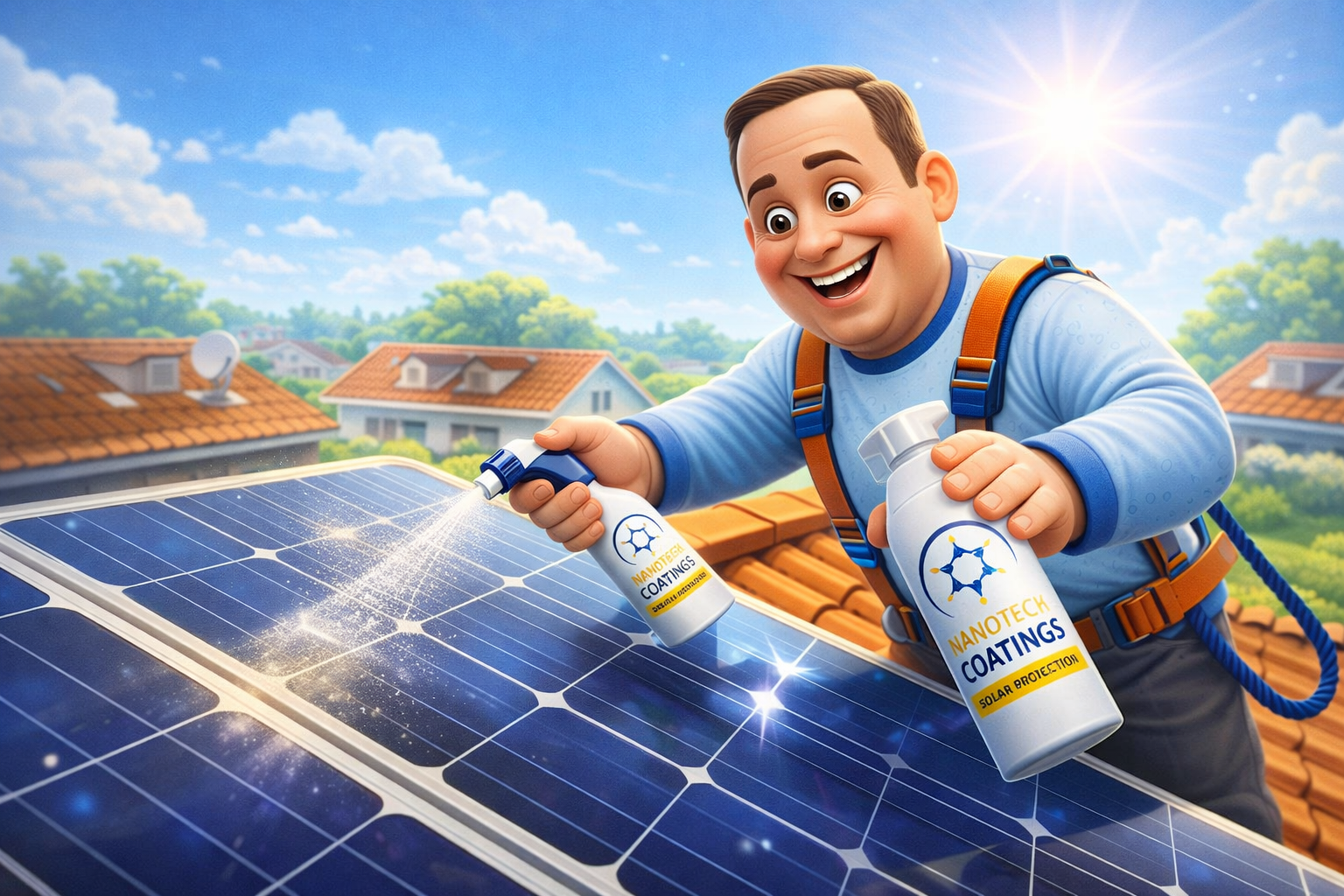
At Solar Cleaning Experts, every professional clean includes our exclusive Nanotech coating at no extra cost. This hydrophobic layer bonds to the panel glass at a microscopic level, helping repel dirt and reduce the rate of soiling for up to 24 months after treatment. It's the same class of surface protection technology used in aerospace and automotive applications, and it's available exclusively through us in Australia.
The result is panels that not only perform better straight after a clean, but stay cleaner for longer between services.
Not Sure If Your Panels Need Cleaning?
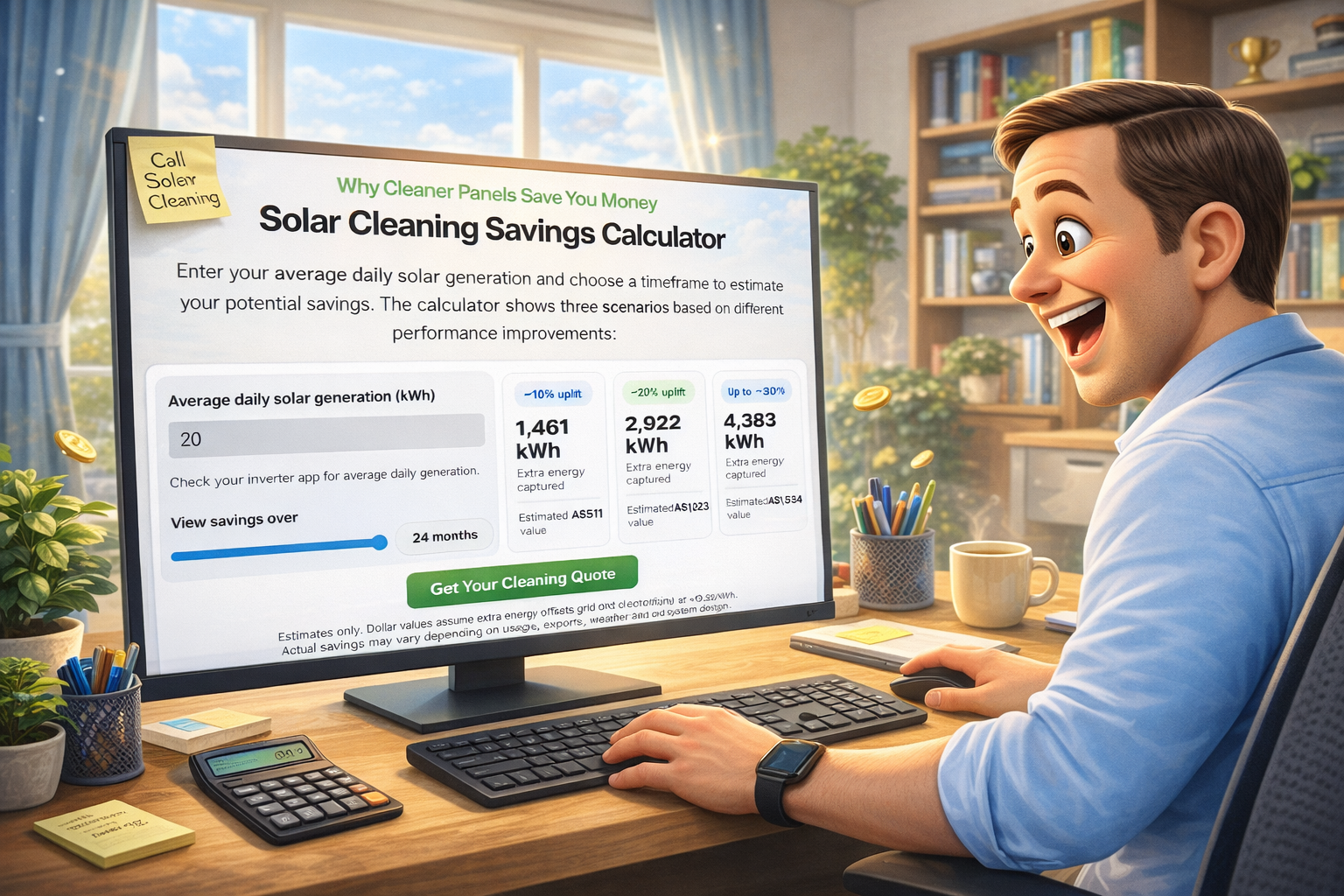
Use our Solar Panel Cleaning Savings Calculator to estimate how much output you could be recovering, then get a free quote with no call-out fees and no obligation. Most Sydney services are completed in 45 to 90 minutes, and in most cases you don't even need to be home.
If your panels haven't been cleaned in the past 12 months, there's a good chance they're costing you money quietly. It's worth finding out.
Trusted specialists • Fully insured • Solar-safe
Get Your Free Quote in Seconds
Your quote includes professional solar panel cleaning, a FREE exclusive Nanotech coating, no call-out fees, and no obligation.